Crop Spotlight - Wheat

June 8, 2023

Crop Spotlight


Chad Smith, Sales Agronomist US North


Wheat


Wheat is primarily located-

Wheat has been cultivated for over 10,000 years and is one of the most versatile crops. There are six classes of wheat produced in 42 states across the U.S., and you will find wheat in every state of the north region, with North Dakota having the most production acres.


Common deficiencies for wheat-

Since wheat is grown in many areas in the U.S., many different deficiencies could appear in these crops. Some nutrient deficiencies you might see are nitrogen, calcium, magnesium, etc.


What are the periods of influence for wheat-

Wheat has a few critical periods of influence, from early on at the tiller to flag leaf and grain fill. One of the first milestones in wheat growth is jointing, when the first node becomes visible at the base of the shoot. It is also known as Feekes 6 growth stage and is significant for a couple of reasons. Feekes 6 is the turning point for the plant at which the meristematic tissue converts from vegetative growth to reproductive growth. The developing head is visible in the stem, and the number of spikelets and head size has been determined. This growth stage also is a cut-off for herbicide and nitrogen applications to prevent crop injury.


Ensuring the wheat crop has the correct amount of nutrients during the vegetative growth period is essential to maximize head size and the number of spikelets at Feekes 6.


How NACHURS can help your crop-

It all starts by using a high-quality in-furrow starter fertilizer like NACHURS Triple Option® to ensure a quick and uniform emergence. As the crop moves into the tillering stage, nitrogen comes to mind as the vital nutrient to apply, but the crop needs more nutrients than nitrogen at this stage. To make the UAN nitrogen application more efficient, we are adding in NACHURS K-flex® at 1 gallon per 10 gallons of UAN along with NACHURS Finish Line® at 1 quart per acre. The NACHURS Bio-K® in both products helps all the macro and micronutrients in the tank to enter the plant. Sulfur activates the enzyme nitrate reductase, which converts nitrates to amino acids within the plant, which is how sulfur metabolizes nitrogen making it available to the plant. Potassium is needed to develop stronger stems, along with assisting in photosynthesis. By adding K-flex and Finish Line to UAN ensures that the crop has the right blend of nutrients during the vegetative growth period to maximize head size and the number of spikelets.


The second period of influence is the 2nd half of the crop life, known as the reproductive growth. The wheat head and top two leaves are responsible for 90% of the yield building photosynthate. We are adding a balanced N-P-K solution to the fungicide pass at the flag leaf to ensure we keep the plant healthy to senescence. We have been boosting the flag leaf fungicide pass by adding NACHURS NocKout® at 1 gallon per acre and NACHURS Finish Line a 1 quart per acre. With this application, we feed the crop with N, P, K, and micronutrients, and the fulvic acid and Bio-K help drive the fungicide and nutrients into the plant. Balanced nutrient applications during the reproductive growth period is just as critical as the nutrients being applied during the vegetative growth to maximize plant health and to keep the plant energy stores focused on yield production rather than being diverted to survival.


For more recommendations or questions, please contact your local NACHURS sales manager.


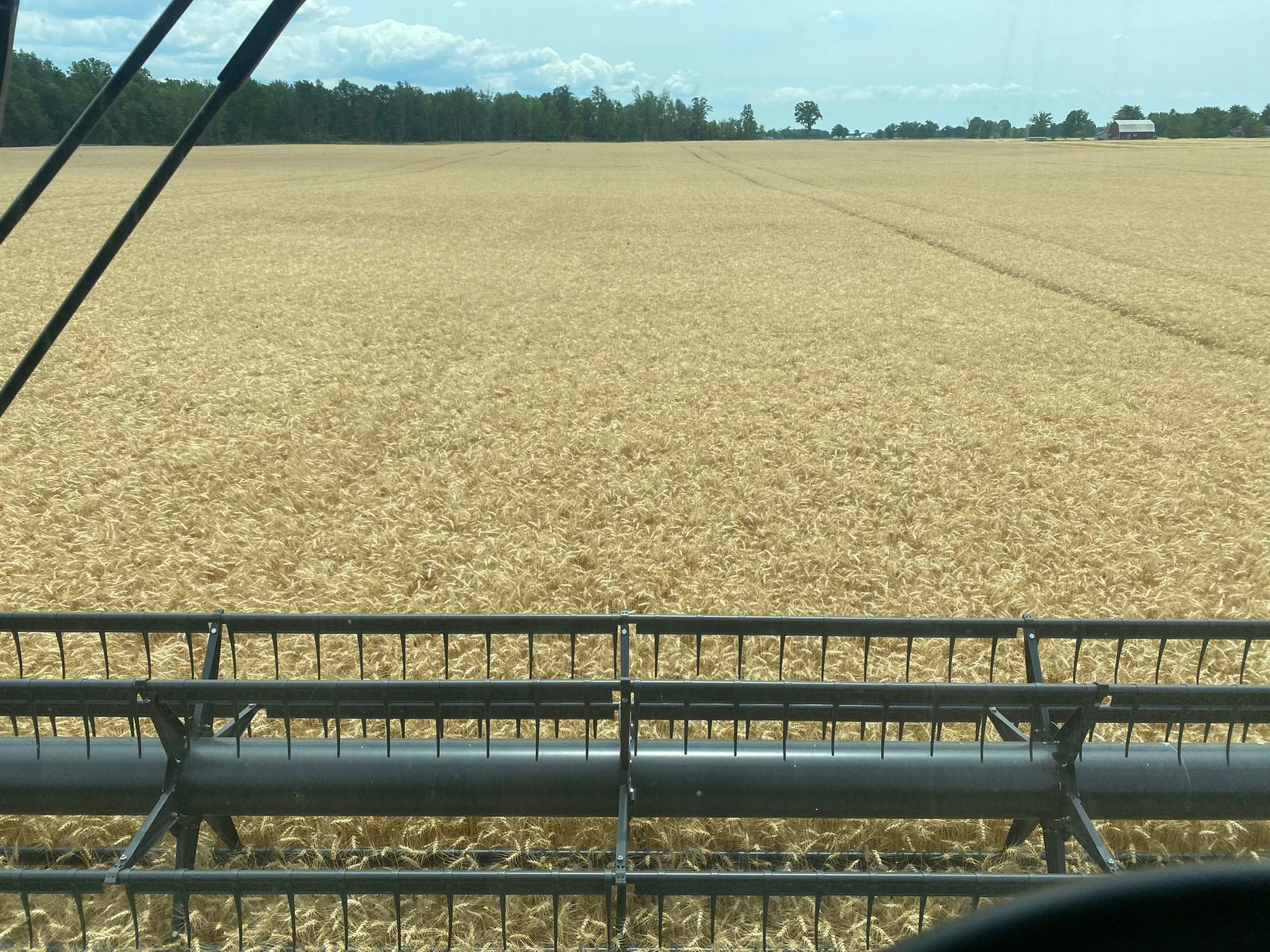
Pictures below-


By mackensey.kempton • November 4, 2026
It has been a soggy year for a significant number of growers, and lately my conversations keep coming back to one topic: crops stressed by too much rain. Excessive rainfall typically causes the following: · Leaching and/or denitrification cause the loss of nitrogen, sulfur, boron, and molybdenum. · Root systems become oxygen starved. · Nutrient uptake slows because roots are damaged or inactive. · Photosynthesis and energy production decline. · Disease pressure often increases. The goal after a wet period is to restore energy production, root activity, nutrient uptake, and nitrogen metabolism. Each of the following nutrients plays a specific role in that recovery:  · Nitrogen helps rebuild chlorophyll and vegetative growth, often the most deficient nutrient after heavy rain. · Sulfur is critical for amino acid formation and nitrogen efficiency. · Potassium helps water regulation, stress tolerance, enzyme activation, and carbohydrate movement throughout the plant. · Magnesium is the core component of chlorophyll; supports photosynthesis recovery. · Molybdenum supports nitrate reduction and nitrogen assimilation. · Manganese also supports photosynthesis as well as antioxidant systems. · Zinc supports hormone production and new root growth. · Boron supports sugar movement and reproductive development. · Calcium helps rebuild cell walls and root tips. · Iron supports chlorophyll production, especially in saturated soils with a higher pH. Creating a treatment that contains everything can be challenging but luckily for us we have the products to make much of this happen! According to my research, the nutrients that provide the greatest impact after excessive rainfall would be nitrogen, sulfur, potassium, magnesium, molybdenum, manganese, and zinc. These work together to restore photosynthesis, root growth, energy production, nitrogen metabolism, stress tolerance, antioxidant production, and carbohydrate movement. When it comes down to it, stress is stress. Even though this paper focuses on excessive rainfall, most of my suggestions work for plants under any stress condition. Our RePAC technology is particularly important following stressed conditions because the acetate base along with the potassium, magnesium, and calcium nutrient partners not only contribute carbon and support energy metabolism but restore stomatal function and nutrient movement throughout the plant, support photosynthesis recovery and help rebuild cell walls and root tips that strongly influence new growth. I broke it down for these common crops: · Corn: N, S, K, Mg, Mn, Mo. · Soybeans: K, Mg, Mn, Mo, B, Co. · Peanuts: K, Ca, Mg, B, Mo. · Cotton: K, Mg, Mn, B. · Watermelon/Tomatoes: K, Ca, Mg, B. A one-fits-all treatment would be: Ingredients (per acre) · 2 quarts of 21% N · 1 quart of K-Flex · 1 quart of Microzone Mg · 1 quart of CropMax Directions 1. Apply with 15 plus gallons of total solution per acre through ground or aerial application. 2. If you use a drone to apply this mixture, reduce the rate of nutritional products to achieve a 50:50 water-to-product ratio. Every year is different, but if you run into crop conditions brought on by weather-related influences, contact me and we will work through the treatment options based on your crop and environmental conditions!
By mackensey.kempton • November 3, 2026
Back in November of 2024, I created an article titled, “Winning by a Hair”. This November, I wanted to expand on the lessons from the past two years. Recalling the story of the tortoise and the hare reminds us that slow and steady may win the race or just leave us out in the cold. The words slow and steady can again be attached to awaiting our spring planting as well, and even though harvest is fresh in our memories, so is the opportunity to recall what worked well with our crop plan, and what we may need to adjust for 2027. With farming being a series of lessons from the first crop we plant through to the 48th crop we will plant next year, it is becoming more urgent to improve from what we learned. As we look back on what may have caused stress in 2026, for both crops and us, it is important to understand why and how we responded to these stresses. More effectively we need to consider what we learned from these opportunities. For those who struggled through a wet spring, how did your later-planted crops respond? When crops had ample moisture enhancing a perfect seeding time, only to collapse from a month of drought, was there a recovery opportunity? In areas that have witnessed yields never achieved before, did we get a chance to discover what triggers or events amplified these successes? Every result reveals a learning opportunity for us to take advantage of if we choose! “Winning By a Hair, Revisited” can fit multiple connotations, but I wanted to expand on how your crops succeed by a hair, or many hairs. Combing through what we continue to learn directed me to step back to early spring, as we were seeding the 2026 crops and germination began. The emergence of the radical root initiated the brains of each plant, reaching into the soil for moisture and nutrition. The journey that started is what we have the power to influence throughout the year. Nutrients placed close to each seed must be safe for the seed, available to the plant, and balanced. Helping each seed reach its genetic potential requires both these conditions and a clear understanding of nutrient availability and uptake. As this root continues to express itself, it allows sprouts and cotyledons the ability to emerge above ground to enable photosynthesis, thereby maintaining and feeding the plant and root. The plant, although independent, relies on our management to achieve greater success. As roots grow and absorb naturally available nutrients and applied fertilizer, they reflect the quality of our crop management. This is where we can add a little more information into the equation. Understanding the value of orthophosphate as the only form a plant can utilize, and having the ability to protect it from tying up in the soil is another crop-planning strategy. Humic, fulvic and organic acid products continue to be introduced and incorporated into cropping plans. The high chelation value that protects phosphorous is only one of the effects, with a greater expression being that of increased root tips and hairs. Having great root proliferation and growth allows the crop to engage in microbial feeding as well. Measurements of increased root tip numbers and root lengths indicate that humic acids and ALPINE Bio-K can help crops access more nutrients from the soil. Dr. John Strauss, a director of Agronomy in Tulsa, Oklahoma, has documented that a fertilizer blend of N, P, K vs only N, P causes a synergistic effect of over 9%. This begins a process of nutrient use efficiency out of the gate. This engrained into the understanding that potassium is a plants nutrient facilitator, allowing plants the ability to transport fertility, as well as improving water management. This is where potassium’s role brings the theme of “Winning by a Hair, Revisited” into focus. The increased turgor pressure and stomatal activity begins to allow plants to manage the weather effects discussed in paragraph two. It is also documented that the nutrient and sugar transport enabled by potassium feeds not only the plant, but the soil microorganisms as well. Knowing this, we continue to learn that as microbes move in and out of the roots, their exit increases root hair length and efficiency, which are instrumental in water uptake and management. It is through the balanced fertility program that our ALPINE Bio-K amplifies a plant’s ability to create greater success and improve efficiency within the plant. There is more to explore. As you plan your 2027 starter fertilizer program, consider the value of potassium, especially ALPINE Bio-K .  Throughout the winter, please reach out with your questions on potassium, humic acids, and nutrient balances with micronutrients. Your ALPINE DSMs and dealers will be happy to assist! I wish everyone a safe and joyous Fall.
March 17, 2025
Transform Your Harvest: Discover the Benefits of Finish Line®
March 13, 2025
The effect of foliar fertilization on wheat yield.
More Posts